Check out the article here: Plato Warned Us About ChatGPT (And Told Us What to Do About It)
Check out the article here: Plato Warned Us About ChatGPT (And Told Us What to Do About It)

Check out the article here: Science Keeps Changing. So Why Should We Trust It?
Check out the Daily Nous feature here: Philosophy to the Rescue of Science
Check out the article here: Is green really ‘green’? The mind-bending science of color.

This Element offers an opinionated and selective introduction to philosophical issues concerning the metaphysics of color. The opinion defended is that colors are objective features of our world; objects are colored, and they have those colors independent of how they are experienced. It is a minority opinion. Many philosophers thinking about color experience argue that perceptual variation, the fact that color experiences vary from observer to observer and from viewing condition to viewing condition, makes objectivism untenable. Many philosophers thinking about colors and science argue that colors are ontologically unnecessary; nothing to be explained requires an appeal to colors. A careful look at arguments from perceptual variation shows that those arguments are not compelling, and especially once it is clear how to individuate colors. Moreover, a careful look at scientific explanations shows that colors are explanatorily essential.
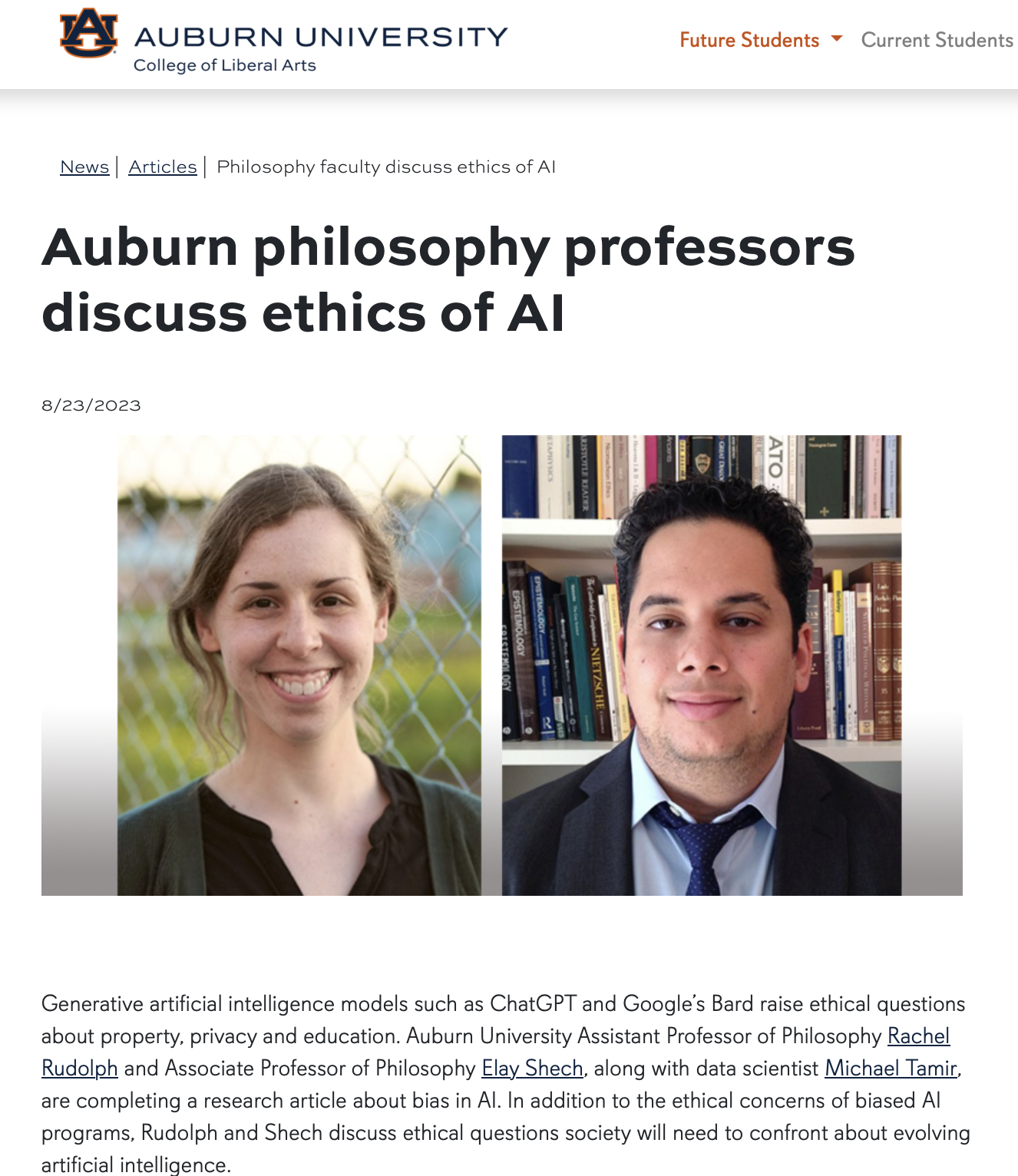
Excited about our work being featured in Auburn University’s Expert Answers this week!
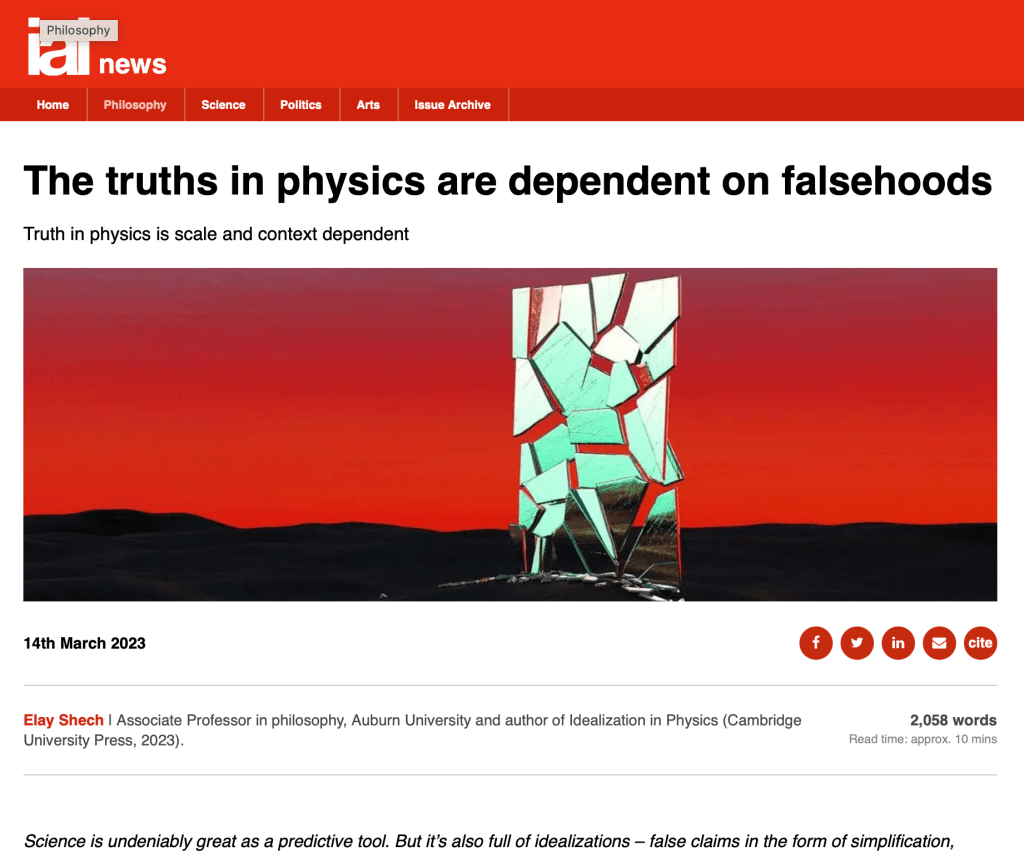
Read my newest article here:
https://iai.tv/articles/the-truths-in-physics-are-dependent-on-falsehoods-auid-2415?_auid=2020
Idealizations are ubiquitous in science. They are distortions or falsities that enter into theories, laws, models, and scientific representations. Various questions suggest themselves: What are idealizations? Why do we appeal to idealizations and how do we justify them? Are idealizations essential to physics and, if so, in what sense and for which purpose? How can idealizations provide genuine understanding? If our motivation for believing in the existence of unobservable entities like electrons and quarks is that they are indispensable to our best theories, should we also believe in the existence of indispensable idealizations?
My new book, Idealizations in Physics (Cambridge University Press), sheds light on such questions and connects with issues such as epistemic justification, mathematical Platonism, scientific realism, and scientific understanding.
Special thanks to the series editor James Weatherall. Find the book here and on Amazon


 Elay Shech